

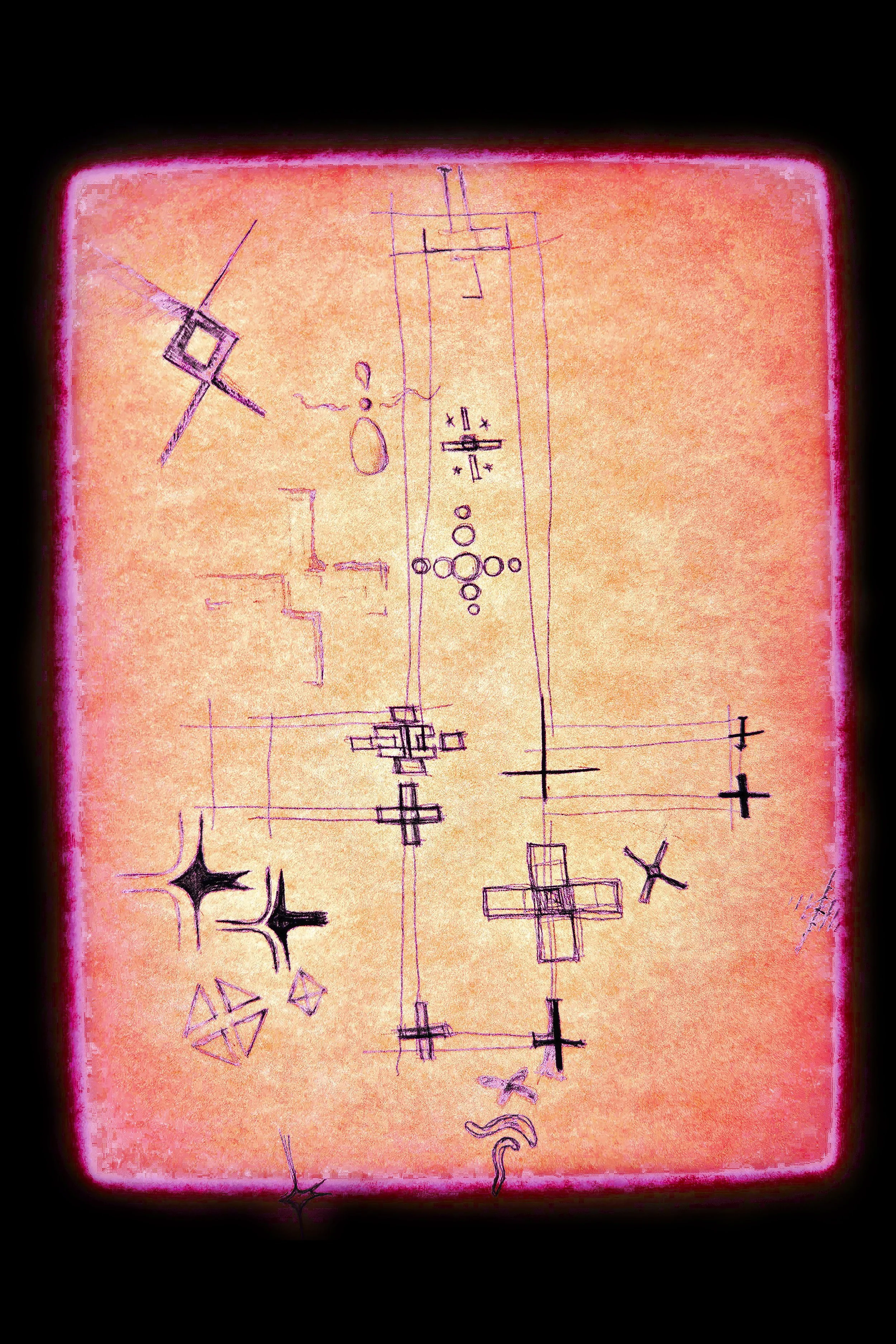
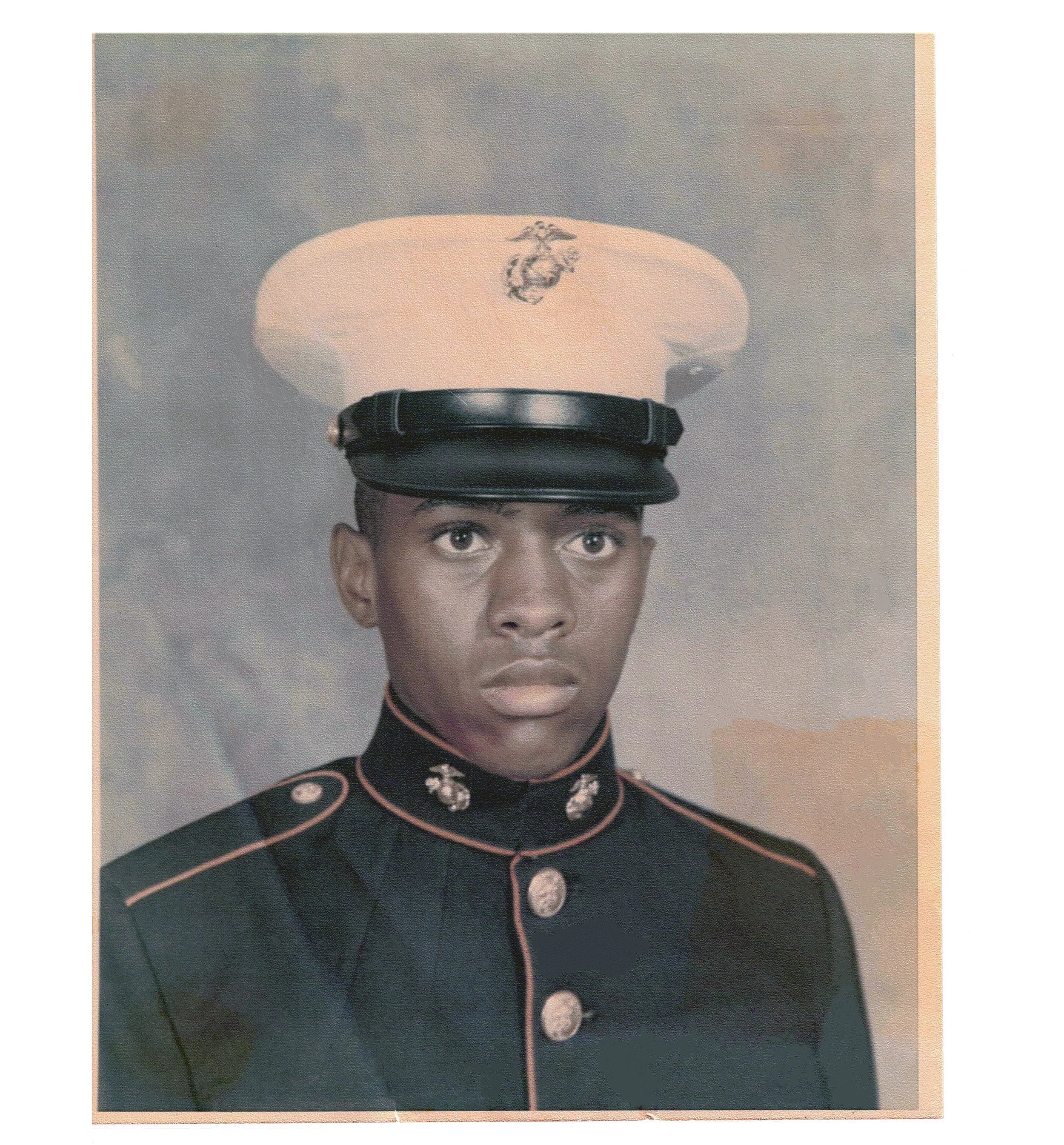
THE END DEGREE - A “Performative” Autoethnographic Graduation commencement speech to honor a history lived with Code-switching directly in response to “Green University”.
Gesto Apparanthem
from the Latin gestum (acts performed; deeds carried; what has been done and borne forward) + apparanthem (constructed compound of apparere, to appear, to become visible before witness; and -anthem, from the Greek anthos, a gathering, a flowering into form).
Literal rendering: Acts brought into appearance. Deeds that have flowered into form.
A Gesto Apparanthem is not a portfolio. A portfolio is a selection made for legibility - curated to convince an external audience. A Gesto Apparanthem is an honest accounting of a sustained practice: the body of work that results when a practitioner looks back and recognizes that the accumulated acts - finished and unfinished, distributed and withheld, completed and abandoned - are already speaking to one another. The coherence is not in each work's individual resolution. The coherence is in their presence together. What was incomplete alone is finished in conjunction.
This is the collection that becomes whole by being gathered.
The precedent exists in performance theory. Diana Taylor, in The Archive and the Repertoire (2003), distinguishes between the archive - what gets written down, preserved, institutionalized — and the repertoire - what lives in the body, in the act, in the doing. A Gesto Apparanthem holds both simultaneously. It is the archive of a repertoire. The written record of a life in motion.
Judith Butler's work on performativity is equally instructive. In Gender Trouble (1990), Butler argues that identity is not something you have - it is something you do, repeatedly, through acts that cite and reinforce prior acts. The Gesto Apparanthem operates on this same logic: the identity of the practitioner is not established by their most finished work, but by the totality of their doing. Every act of making, regardless of its resolution, is a citation of the practice. The unfinished piece is not a failure. It is the most honest document of a working mind.
Peggy Phelan, in Unmarked: The Politics of Performance (1993), makes perhaps the most radical claim in this tradition: performance cannot be saved. It exists in the moment of its doing, then disappears. What remains are traces - photographs, notes, documents, memories. A Gesto Apparanthem does not argue with Phelan. It agrees. And it proposes that those traces, when gathered with intention, constitute a form that is distinct from performance itself - something that can be witnessed not in a single moment but over time, not in one act but in the accumulated arc of a life's work.
Voluntas Auctum
from the Latin voluntas (will; intention; desire; sovereign purpose) + auctum (from augere*: to increase, to grow, to cause to expand - the same root from which auctor, author, and authority derive)
Literal rendering: Will, expanded. The authoring of desire.
To make something is to increase your will by making it. This is Voluntas Auctum.
The etymology is not accidental. Augere - to grow - is the root of auctor: the one who originates, the one who causes something to come into being. To be an author, in the original Latin sense, is not merely to write. It is to be the cause of growth. Every time a practitioner returns to the work - even when it is incomplete, even when the resources aren't there, even when the work goes unseen - something is increasing. The self is being authored forward.
This is the philosophical engine beneath the Gesto Apparanthem. The will does not require a finished product as its proof. The will is proven by the act of returning. Voluntas Auctum is the force that makes a Gesto Apparanthem possible - it is what accumulates across every act, finished and unfinished, that the collection holds.
In the research tradition, this connects to Hal Hershfield's work on future self-continuity: the degree to which a person identifies with who they will become. High future self-continuity correlates with sustained investment in long-term outcomes. The practitioner who keeps making - who keeps returning, who sets down work and picks it up again years later - is exercising Voluntas Auctum. They are choosing, again and again, to increase the will of the self they are becoming.
It also grounds itself in Aristotle's concept of praxis: action that is its own end, distinct from poiesis, which is making that serves only a product. A creative practice understood through Voluntas Auctum is always praxis. The doing is what matters. The doing is what accumulates.
References:
Butler, Judith. Gender Trouble: Feminism and the Subversion of Identity. Routledge, 1990. Denzin, Norman K. Performance Autoethnography: Critical Pedagogy and the Politics of Culture. 2nd ed. Ellis, Carolyn. The Ethnographic I: A Methodological Novel about Autoethnography. Ethnographic Alternatives, 2004. Ericsson, Jon. "Mimesis and Truth in Performance." Spring 2009, pp. 1–18. Hughes, Jenny. Performance in the Time of Terror: Critical Mimesis in the Age of Uncertainty. Manchester University Press, 2015. Phelan, Peggy. Unmarked: The Politics of Performance. Routledge, 1993. Taylor, Diana. The Archive and the Repertoire: Performing Cultural Memory in the Americas. Duke University Press, 2003.
Television & Visual Culture:
Abbott Elementary. Created by Quinta Brunson. Hulu, 2021–present. Carol & Tuesday. Directed by Shinichirō Watanabe. Netflix, 2019. One Piece. Created by Eiichiro Oda. Seasons 1–present. Ted Lasso. Created by Bill Lawrence. Apple TV+, 2020–2023. (Episode: "Sunflowers")
On References and Repeated Viewing:
The texts cited above represent intellectual scaffolding and intellectual research. The television works cited represent lived methodology. I return to Carol & Tuesday most of all - over three hundred times - as my safest space in television and anime. I have returned to Abbott Elementary, One Piece, and Ted Lasso consistently as well, watching them hundreds of times across years, not as entertainment alone, but as archive of gesture, as directional choice, and as study of what it means to live deliberately and make choices deliberately as an artist, a creator, and a director of vision.
Each viewing surfaces new formal details: a hand movement, a spatial relationship, a moment of vulnerability, a moment of pure background. Details I possibly missed before. This is autoethnographic research. These works function as safe spaces that remind me to live fully, to notice, to stay present, to be excited about the moments that literally make up all of what we do - perform, live with one another, see each other as another in a way that helps us understand ourselves.
They are evidence of how I think, what I return to, what teaches me to remember, what teaches me to thrive, what teaches me to move forward. And ultimately, moving forward, I will die. Therefore, I must live.